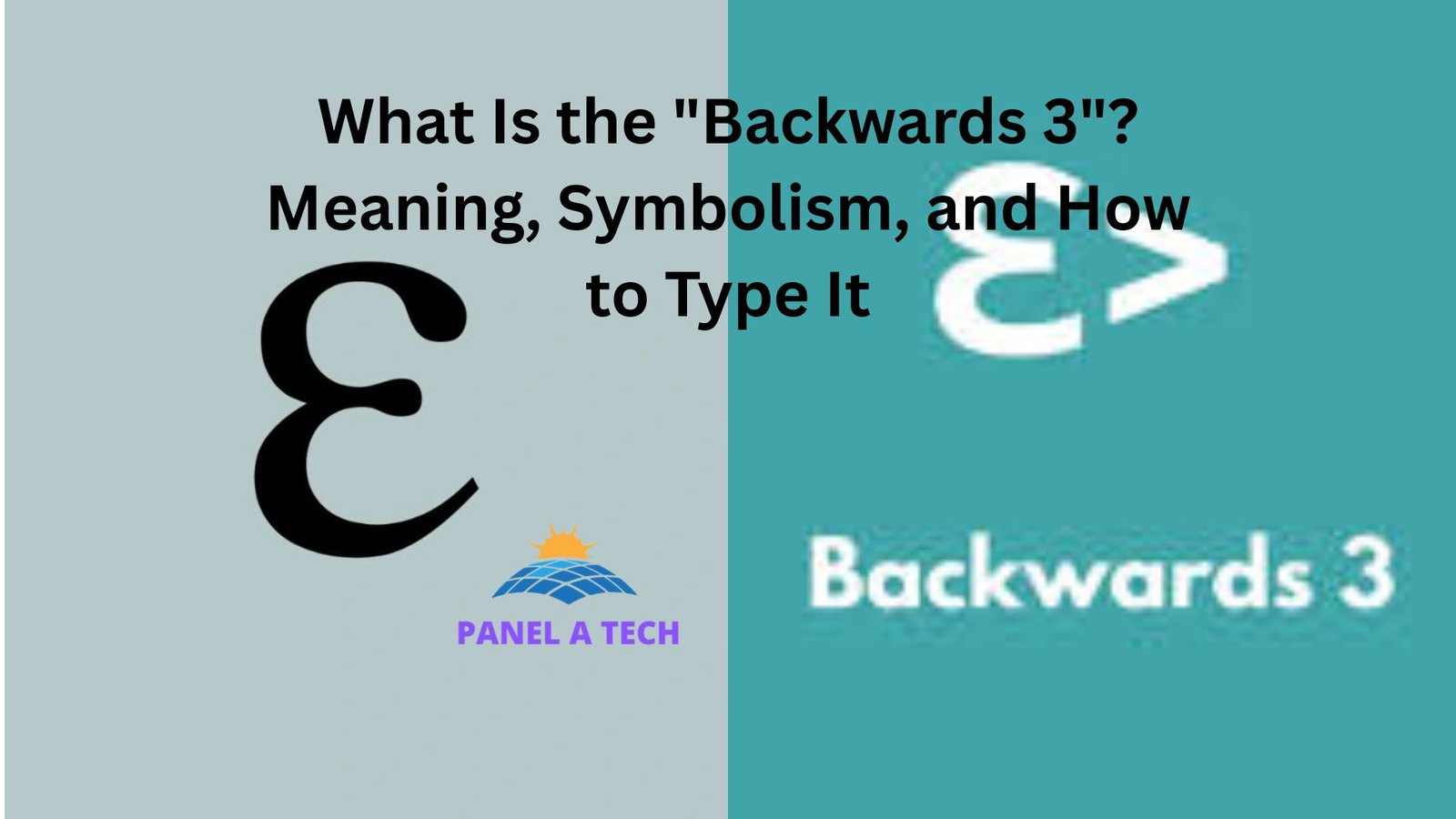
Have you ever stumbled upon a strange-looking character that resembles a “backwards 3” and wondered what it means or where it came from? You’re not alone. From graffiti walls and digital text art to online usernames and cryptic messages, the backwards 3 has been popping up in all sorts of unexpected places.
In this guide, we’ll break down what the backwards 3 is, why it’s used, where it originated, and how you can use or type it yourself. Whether you’re a curious internet explorer, a student of symbols, or just someone who saw it on social media and went, “Wait, what is that?” — this article is for you.
What Is the Backwards 3?
Let’s start simple. The “backwards 3” looks like this: Ƹ or sometimes just the regular E flipped horizontally (like a mirror image). It’s not something you’ll find on your standard QWERTY keyboard, which makes it feel a little mysterious.
Why Do People Call It That?
Well, just take a look at it: Ƹ
Flip a number 3 around and voila! It’s easy to see how the name “backwards 3” came to be. It’s not an official name in the Unicode world, but it’s the term most commonly used in casual speech and on the internet.
History and Origins of the Backwards 3 Symbol
Now that we know what the symbol looks like, let’s dive into its history.
A Little Unicode Background
The backwards 3 isn’t just a visual trick. It’s actually part of the Unicode character set. One of the closest official characters to the backwards 3 is Ƹ (Unicode U+01B8), which is called the Latin capital letter Ezh reversed.
Historically, this character is used in phonetics, especially in the International Phonetic Alphabet (IPA). It was used to represent certain sounds in African languages and phonetic transcriptions.
A Cultural Anecdote
Let’s go back to the early 2000s. I remember browsing MySpace, and someone had the username LƸvƸ. I messaged them, thinking they had some cool hacker-style code in their name. Turns out, they just liked how the backwards 3 looked like a stylized heart when combined with the < symbol, like this: <3 or even <Ƹ.
That’s when I realized: it wasn’t just about language. The symbol was becoming a form of expression.
Common Uses of the Backwards 3
The backwards 3 has found its way into many creative and digital spaces. Here are some of the most common:
1. Art and Design
Designers often use the backwards 3 in logos or type art to create a unique, attention-grabbing look. The mirrored shape gives it an abstract feel, making it great for edgy or futuristic designs.
2. Social Media Usernames
You might’ve seen usernames like:
drƸamcatcher3moƸmotionƸxistence
The backwards 3 helps users create unique handles, especially when their preferred names are already taken. It’s also used to stylize a name to look more aesthetic or alternative.
3. Leetspeak & Internet Culture
Leetspeak, or “1337 speak”, is the practice of replacing letters with numbers or symbols. The backwards 3 plays a role in this world too. Think of it as the cooler cousin of the regular 3. People use it when they want their text to look cryptic or hacker-esque.
4. Symbol of Rebellion
Due to its unusual appearance, the backwards 3 is sometimes seen as a symbol of nonconformity — a subtle way to say, “I don’t follow the rules.”
What Does the Backwards 3 Mean?
Now, let’s talk meaning. Why would someone use a backwards 3 instead of a normal character?
It’s About Expression
Symbols don’t always have fixed meanings. In this case, the backwards 3 is often used symbolically, not semantically. That means it doesn’t stand in for a word, but rather adds style or emotion.
Common Interpretations:
- Love/Heart: When paired with
<, it mimics a heart shape (<3, <Ƹ) - Reversal: Some people use it to represent going backwards or looking at something in reverse
- Mystery or Identity: Because it’s not part of standard text, it gives off a mysterious, coded vibe
- Rebellion or Individuality: Using non-standard characters is a form of standing out
How to Type the Backwards 3 on Your Keyboard or Phone
So now you’re thinking: “Okay, I want to try this out. But how do I actually type a backwards 3?”
Here’s a step-by-step guide depending on your device:
For Windows
Method 1: Copy and Paste
Just copy it from here: Ƹ
Method 2: Use Character Map
- Press Win + R, type
charmap, and hit enter - Search for the Ƹ symbol
- Select it and click Copy
Method 3: Alt Code (Not for all characters)
Type 01B8, then press Alt + X → Ƹ
For Mac
- Open Character Viewer (Control + Command + Space)
- Search for “Latin” or “Ƹ”
- Double-click to insert
On iPhone / Android
Phones don’t have this symbol by default, but you can:
- Copy it from this page: Ƹ
- Use a text replacement shortcut. On iPhone:
- Go to Settings > General > Keyboard > Text Replacement
- Add a shortcut like
b3that auto-replaces with Ƹ
Pro Tip
Once you copy the backwards 3, save it in your Notes app or clipboard manager for easy access.
Symbolism and Hidden Meanings
You might be surprised to learn just how many layers the backwards 3 can have.
Linguistic Symbolism
In phonetics, Ƹ is part of the IPA and is pronounced like the “zh” sound — as in measure or treasure. That soft buzzing “zh” sound isn’t common in English spelling, so it needs a special symbol.
Digital Aesthetics
In internet culture, it adds a techno-futuristic vibe. Using characters like Ƹ, Ȝ, or ∑ makes text feel like it’s from another realm — like a hacker code or sci-fi universe.
Hidden Meanings in Art
Some artists use the backwards 3 as a symbol of mirrored reality, as if saying, “There’s another side to this story.” That’s part of its allure — it’s open to interpretation.
Fun Facts and Trivia
Let’s lighten things up with some quirky trivia about the backwards 3:
- In mirror writing (think Leonardo da Vinci), numbers like 3 become reversed
- In Russian cursive, the number 3 can resemble the letter з (ze), which makes the backwards 3 look even more like a foreign letter
- Some fans of “Stranger Things” pointed out that the backwards 3 looked like part of a secret code on the show (it wasn’t — but it definitely felt cool)
Wrapping It Up
The backwards 3 is more than just a flipped number. It’s a visual expression, a part of digital language, and a reflection of how we use symbols to say more than just words.
Whether you’re using it to stylize a username, add flair to your text, or just because you think it looks cool, the backwards 3 carries a certain aesthetic and symbolic punch.