When someone hears the name CPL Setu Cadila, the first reaction is often confusion. Is it a medicine? A brand? A program? Or something connected to Cadila Pharmaceuticals?
The short answer: it’s related to Cadila Pharmaceuticals Limited (CPL) and typically appears in the context of internal platforms, training programs, or professional systems connected to the company. But the interesting part isn’t the name itself. It’s the ecosystem behind it — how large pharmaceutical companies organize information, train people, and manage operations.
If you’ve ever worked in healthcare, pharma, or medical distribution, you know things rarely move in simple ways. Behind every pill, vaccine, or treatment sits a complex network of people, data, compliance rules, and communication channels. Platforms like CPL Setu Cadila exist to make that complexity manageable.
Let’s unpack what it really represents and why systems like this matter more than most people realize.
Understanding CPL and the Cadila Connection
First, a bit of context.
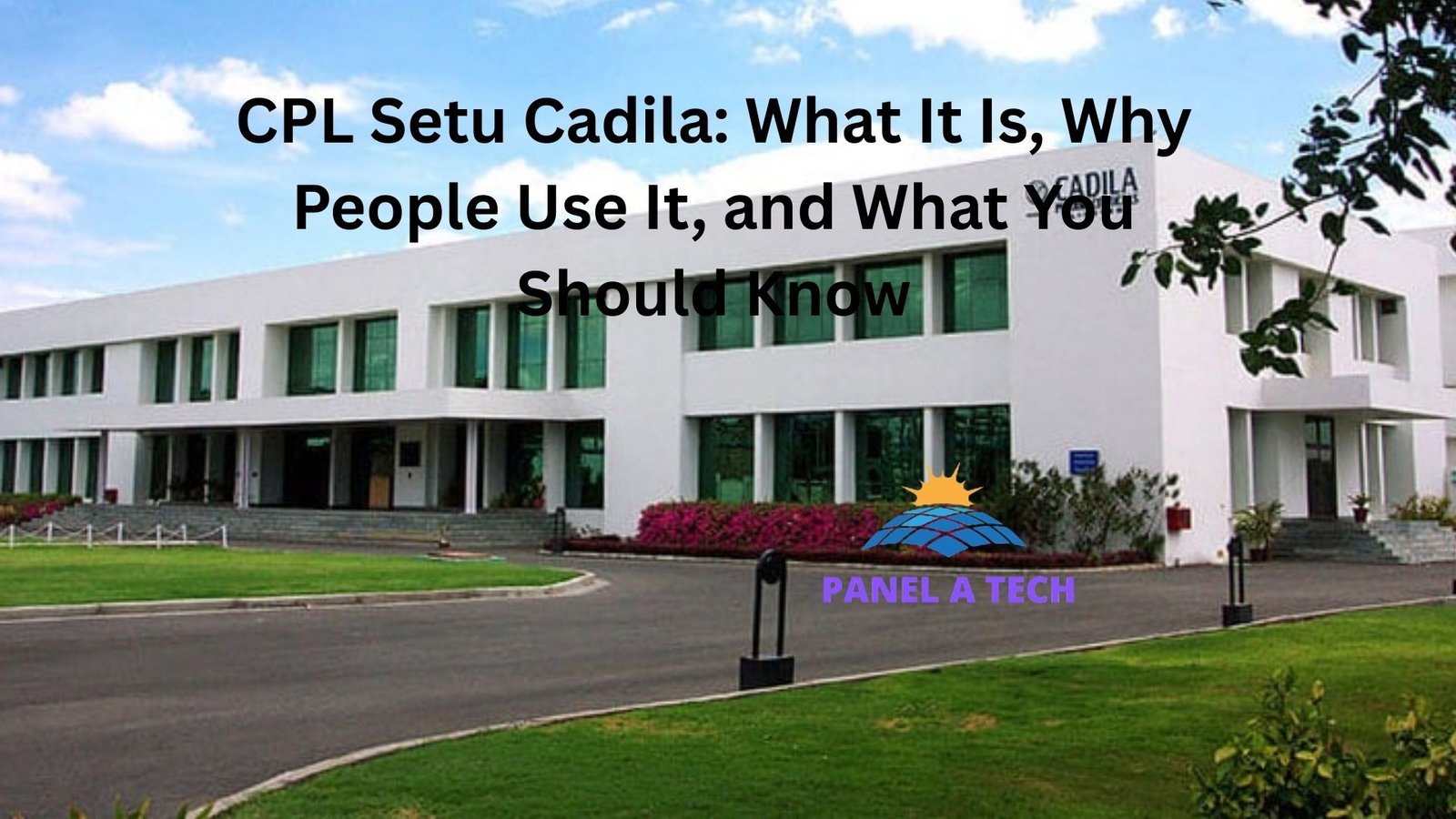
Cadila Pharmaceuticals Limited is one of India’s long-standing pharmaceutical companies. Founded in 1951, it has grown into a global healthcare player producing medicines across multiple therapeutic areas—cardiology, oncology, gastroenterology, respiratory care, and more.
Large pharmaceutical companies operate in a tightly regulated environment. Every process—from research to manufacturing to marketing—must follow strict documentation and quality standards.
That’s where internal platforms come in.
Companies like Cadila often build digital portals or systems for employees, partners, and distributors. These platforms centralize things like:
- product information
- compliance documentation
- training modules
- internal communication
- reporting systems
CPL Setu Cadila is generally understood as one of these internal digital bridges—“Setu” literally means bridge in several Indian languages.
And honestly, the name fits.
Because the whole idea is about connecting people inside a large organization.
Why Pharma Companies Need Systems Like CPL Setu
Let’s imagine a simple scenario.
A medical representative is preparing to meet a doctor in a small city. The doctor asks about a recently launched drug — dosage updates, clinical trial data, side effects, contraindications.
If the representative gives outdated information, that’s not just embarrassing. It can become a regulatory problem.
Pharmaceutical companies solve this with centralized systems.
Instead of relying on scattered documents or email chains, employees access a single trusted platform that stores verified information.
Systems like CPL Setu typically help with:
- keeping product data updated
- delivering training for field staff
- sharing marketing materials
- tracking sales activity
- ensuring regulatory compliance
Think of it as the company’s internal knowledge hub.
Without tools like this, large pharma operations would quickly become chaotic.
The “Setu” Idea: Bridging Departments
Here’s something people outside the pharmaceutical industry rarely see.
The biggest challenge in pharma isn’t just making medicines. It’s communication between departments.
Research teams develop compounds.
Regulatory teams approve documentation.
Manufacturing teams scale production.
Sales teams explain products to doctors.
Each group speaks its own language.
A platform like CPL Setu acts as a bridge between those worlds.
For example:
A product manager uploads updated clinical data.
Within hours, field representatives across the country can access it.
Now everyone tells the same story when speaking to healthcare professionals.
It sounds simple. But at scale — with thousands of employees — it’s incredibly powerful.
Training the People Who Represent Medicines
Here’s a small moment that happens every day in healthcare.
A doctor finishes a long morning of patient consultations. In walks a pharmaceutical representative. The rep has maybe three minutes to explain a drug before the doctor moves on.
Those three minutes matter.
The rep needs to understand:
- disease mechanisms
- drug interactions
- dosage guidelines
- competitive products
That knowledge doesn’t come from memory alone. It comes from continuous training.
Internal platforms like CPL Setu often host learning modules for this purpose.
Employees log in, take courses, watch product briefings, complete assessments, and track certifications.
Sometimes the training is straightforward.
Other times it dives deep into pharmacology.
The goal isn’t just selling. It’s ensuring the person representing the medicine understands it properly.
Because in healthcare, misinformation can be dangerous.
Compliance: The Quiet Giant of the Pharma Industry
Let’s be honest. Compliance isn’t the most exciting topic.
But in pharmaceuticals, it’s everything.
Governments and regulatory bodies require companies to document nearly every step of their operations. Marketing claims must be supported by scientific evidence. Promotional materials must follow strict guidelines.
If a representative accidentally shares incorrect promotional material, it can trigger serious consequences.
So companies rely on systems that control and track information distribution.
With a platform like CPL Setu, materials are usually:
- uploaded centrally
- reviewed for compliance
- approved before field use
That way, everyone in the organization works from verified resources.
It’s not glamorous work. But it keeps the industry functioning responsibly.
How Digital Platforms Are Changing Pharma Culture
Ten or fifteen years ago, pharmaceutical companies were much more paper-driven.
Training manuals were printed.
Sales data was often reported manually.
Internal communication moved through long email chains.
Today things look very different.
Digital platforms — including systems like CPL Setu — have transformed the daily workflow.
Field representatives can now:
- check product updates instantly
- submit reports from mobile devices
- access training videos anytime
- track performance metrics
And managers get a clearer view of what’s happening across regions.
In other words, decision-making becomes faster.
And in healthcare, speed can make a real difference.
The Human Side of These Platforms
Technology tends to sound cold and corporate.
But if you talk to people working inside pharma companies, they’ll tell you something interesting.
Internal systems often become part of daily routine.
A sales rep might start the day by logging into the platform while having morning tea.
Check product updates.
Download new brochures.
Review training reminders.
Then head out to visit hospitals and clinics.
Later in the evening, they log back in to submit reports.
It becomes a rhythm.
Not flashy. Just quietly useful.
Challenges With Internal Systems
Of course, no platform is perfect.
Anyone who’s worked in a large organization knows the usual issues.
Sometimes systems feel complicated.
Sometimes employees forget passwords.
Sometimes updates take longer than expected.
And occasionally the interface looks like it hasn’t been redesigned since 2012.
Still, despite the occasional frustration, these platforms are essential.
Without them, coordination across thousands of employees would be nearly impossible.
Why the Name “Setu” Actually Makes Sense
Names matter more than companies admit.
“Setu” is a simple word. It means bridge.
And that’s exactly what the platform represents.
A bridge between:
- research and sales
- headquarters and field teams
- knowledge and real-world healthcare conversations
When a doctor asks a question about a medication, the answer often travels through this invisible bridge.
From scientific teams.
Through internal platforms.
To the representative standing in the clinic.
It’s easy to overlook the infrastructure behind that moment.
But it’s there.
Quietly doing its job.
The Bigger Picture: Digital Infrastructure in Healthcare
Zoom out for a second.
Healthcare isn’t just doctors and patients anymore. It’s an enormous web of digital infrastructure.
Electronic medical records.
Drug safety databases.
Clinical trial systems.
Pharmacovigilance platforms.
Internal company systems like CPL Setu Cadila are one piece of that puzzle.
They help ensure that information moves accurately and quickly through the pharmaceutical ecosystem.
And in a world where medical knowledge evolves constantly, that flow of information matters more than ever.
Final Thoughts
At first glance, CPL Setu Cadila might sound like a technical name buried inside a corporate system.
But it represents something larger — the digital backbone that helps pharmaceutical organizations stay connected, informed, and compliant.
Behind every medicine sits an entire network of professionals trying to get the details right.
Doctors rely on accurate information.
Patients rely on safe treatments.
Companies rely on systems that keep everyone aligned.
Platforms like CPL Setu quietly support that mission.
Most people will never log into one. And that’s fine.
But the next time you see a pharmaceutical representative confidently explaining a treatment to a doctor, there’s a good chance that somewhere in the background, a system like this helped make that conversation possible.